Gameplay
The sport built for the humanoid era. Two enter as one competitor: a pilot and an avatar, in the concentric ring, made for the screen.
Classes, the ring, armour, how a match is won, and the battle HUD. Each part has a view.
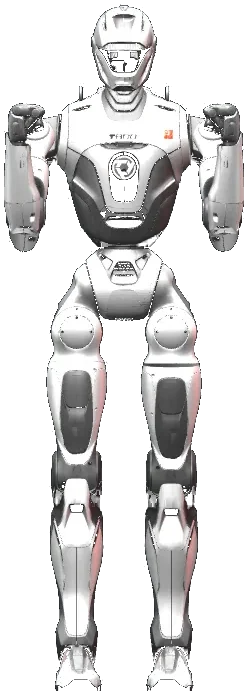
Katena's benchmark games score a humanoid on six axes: Speed, Power, Precision, Stability, Endurance, and Intelligence.
Three weight classes
Robots compete in their own size bracket, so every match is between platforms of a similar scale.
Small-sized class
<1.2 m · <40 kgCompact platforms tuned for agility and tight control: fast footwork, quick exchanges, and scrappy close-range play.
Mid-sized class
1.2-1.5 m · 40-60 kgThe balanced bracket: enough reach and mass for decisive strikes while staying mobile enough to run full match pace.
Full-sized class
>1.5 m · 60 kg+Maximum scale and presence: long reach, heavy hits, and arena-filling movement define the full-sized matchup.
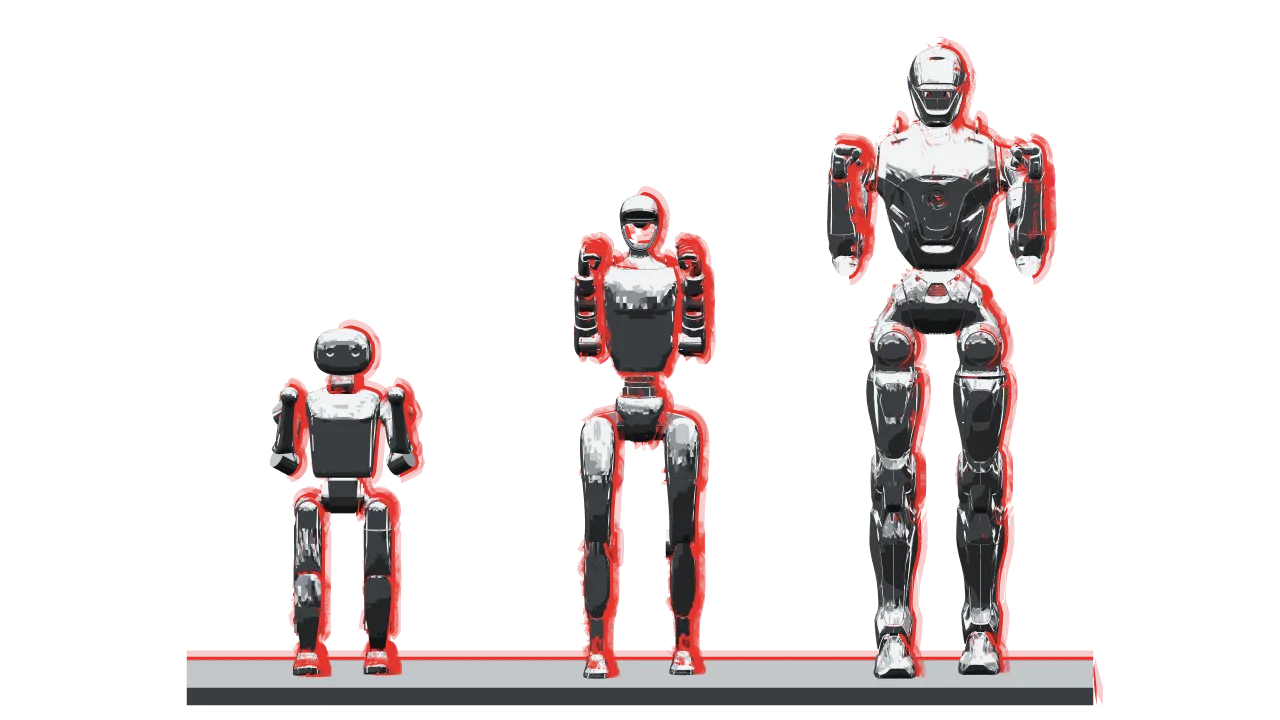
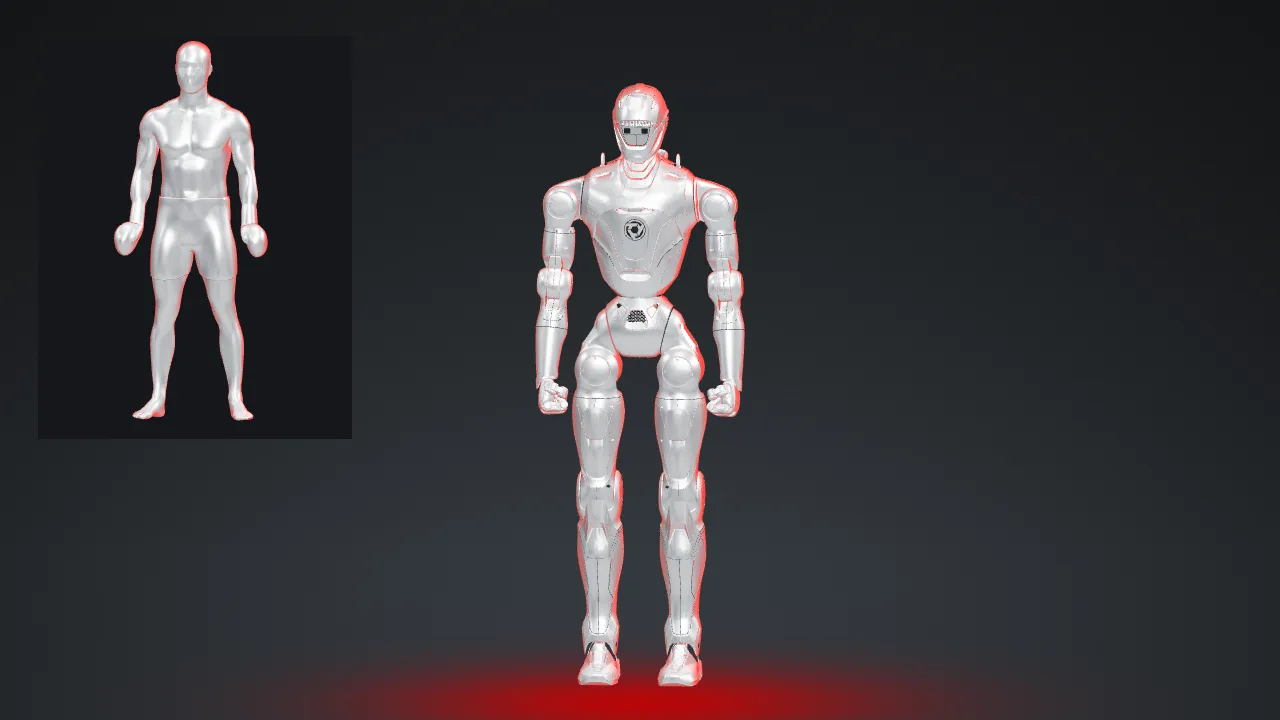
One pilot, three avatars
Two enter. One competitor. A pilot drives a robot of any weight class, and the pilot's name is the name on the card. The robot mirrors the pilot's full body, so what the pilot does, the avatar does.
- 01
Full-body mirror
The robot copies the pilot's whole body, tracked through a VR rig or full-body motion capture.
- 02
Any weight class
The same pilot can drive a small, mid-sized or full-sized robot. Only the avatar's size changes.
- 03
Same direction
Pilot and robot face the same way, so what the pilot sees lines up with what the robot does.
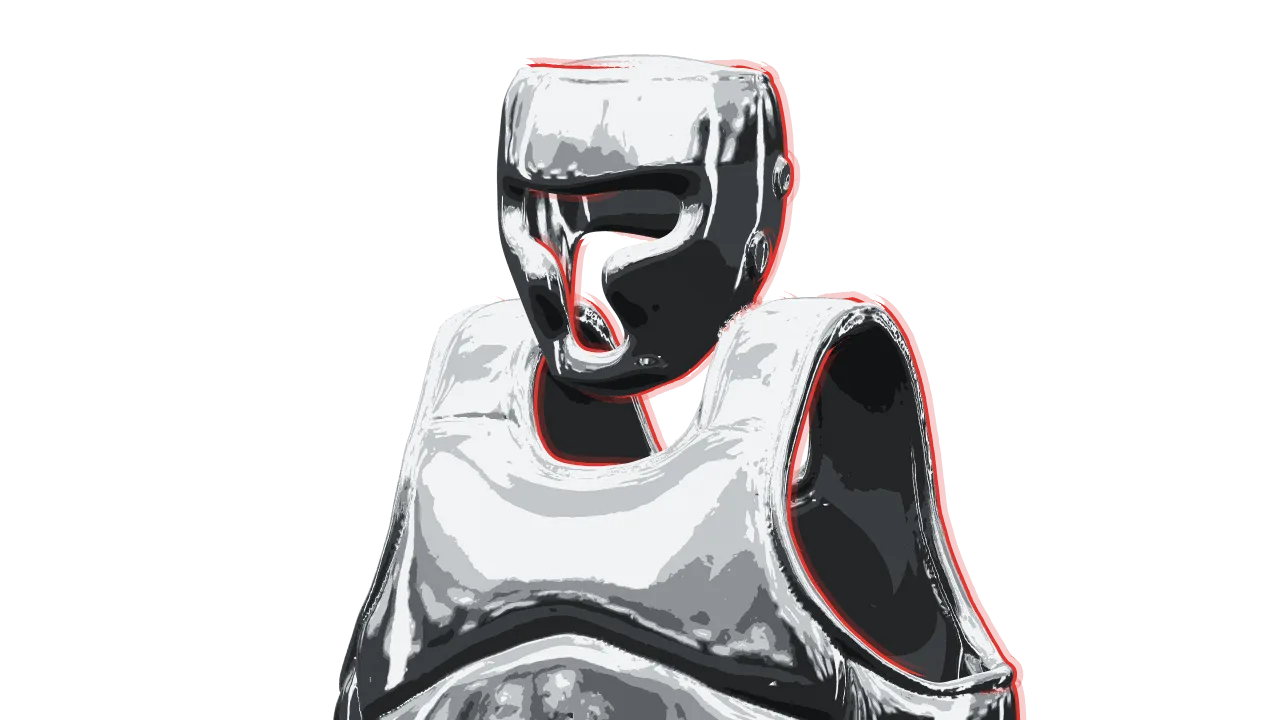
Standard hit-detection armor
Custom robot armor with embedded sensors that detect valid hits and calculate scoring across three distinct hit zones.
Head
Critical Damage · 2×Direct hits to the cranial sensor array deal maximum damage. Precision targeting of the head module is rewarded with critical scoring multipliers.
Chest
Damage · 1×Center-mass strikes to the torso plating register standard damage. The primary target zone with the widest sensor surface area.
Abdomen
Damage · 1×Lower torso impacts score standard damage. A secondary zone that rewards varied attack angles and low-line fighting strategies.
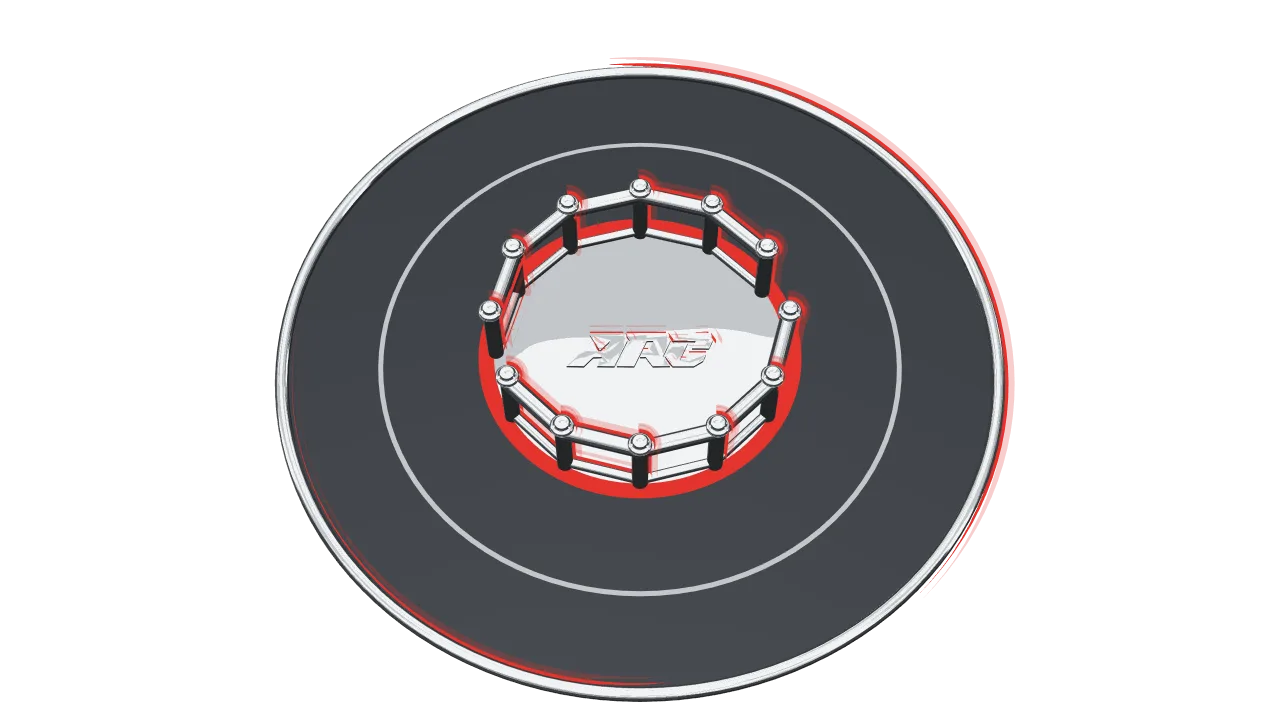
The concentric ARC ring
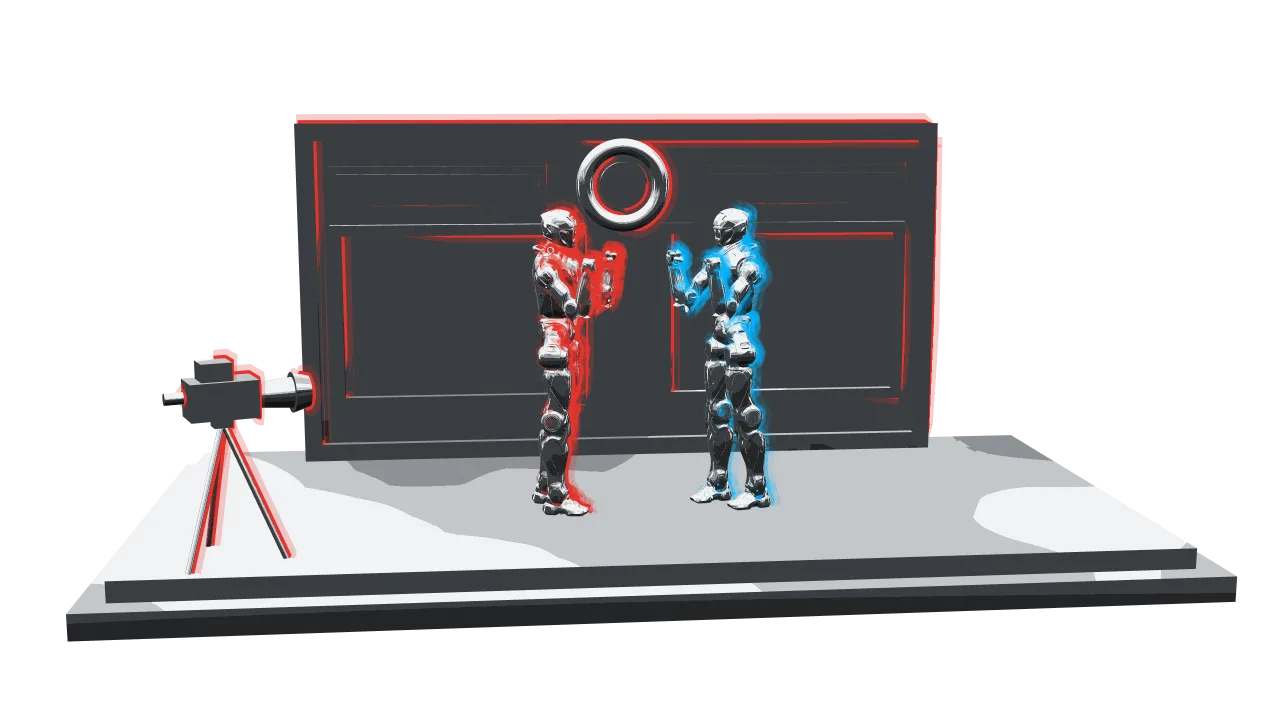
A fenced centre for the avatars and an outer ring for the pilots. They face the same way, so the pilot's movement and the avatar's movement stay one action.
- 01
The Central Arena
An enclosed circular platform with a 1.5-meter radius where robotic avatars operate and compete.
- 02
The Pilot Ring
A 2-meter-wide outer track surrounding the arena, giving pilots the physical space they need to move and swing.
- 03
Synchronized Alignment
Pilots face the same direction as their robots, ensuring intuitive 1:1 spatial awareness during operation.
The dual-ring arena physically isolates the combat zone without breaking the pilot's spatial connection to their avatar.
Format, rounds and win conditions
How a match is decided, in plain language: the clock, a fall, and what happens when time runs out.
Round format
150 seconds per round, best of three per match. Match flow in software: Lobby → Ready → Fighting → Paused / Break → Match End.
HP depletion
When the opponent's HP reaches 0, you win the round (checked first among end conditions).
Knockdown (The Fall)
If the opponent's robot falls (IMU detects angle or acceleration beyond standing posture), that robot loses the round instantly.
Time up & double KO
At 150 s, highest remaining HP wins; equal HP → draw. If both reach 0 HP at once → double KO, round draw.
The Benchmark
Six metrics.One scorecard.Every humanoid.
SPEED
Movement velocity · latency · reaction time
POWER
Peak torque · impact force
PRECISION
Strike placement · target-hit rate
Intelligence
Share of match decisions under AI
STABILITY
Recovery from disturbance · balance under impact
ENDURANCE
Continuous operating time · uptime · durability
Made for the screen
Health, the pilot view and the robot view, live. Hits, falls and a lost link show on screen.
Inside the ring.
Hear the next date first, or walk the format from the first class to the last hit.